
Drop Point Hunters – Learning from the Bob Loveless Design
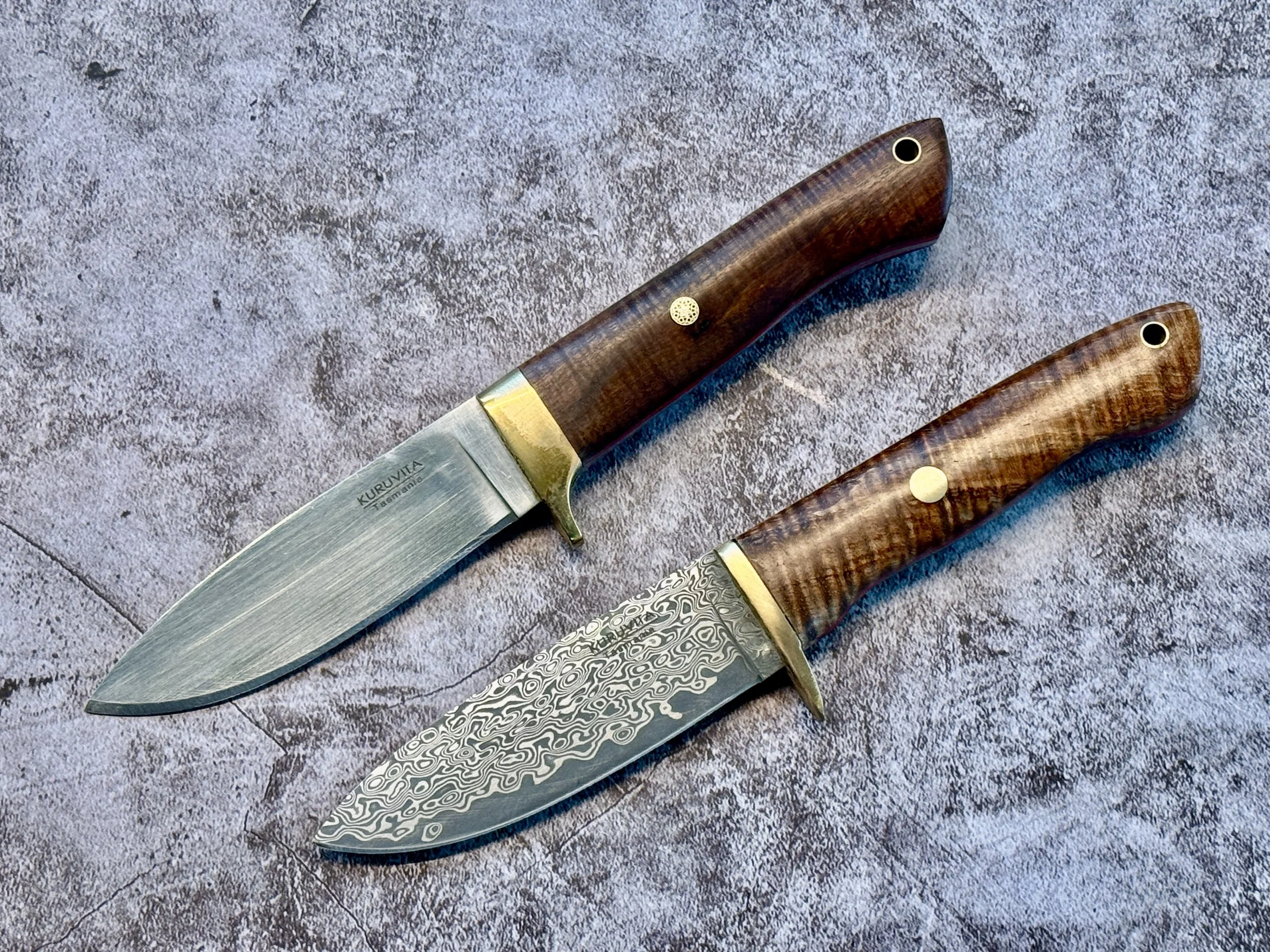
Drop point hunters
When I first started making knives, I spent a lot of time looking at pictures of knives on the internet and saving the ones I liked.
I think that's an important part of learning any craft.
Before you can really understand what you want to make, you need to work out what you're drawn to. Which shapes catch your eye? What proportions feel right? Why does one knife appeal to you while another, technically just as good, leaves you cold?
At first, a lot of that is just gut reaction.
Then you start trying to work out why.
During that process, I noticed that I kept coming back to one particular shape. A broad, practical blade, a gently lowered point and a handle that seemed to flow naturally into the knife.
Eventually I realised I was looking at variations of the drop point hunter, a design closely associated with the legendary American knife maker Bob Loveless. His version of the dropped-point hunting knife became enormously influential and is still copied and interpreted by makers around the world today.There is something deceptively simple about the design.
And, as I've discovered, simple doesn't necessarily mean easy.
I've made a few drop point hunters now and getting the proportions to feel right has taken more effort than I expected. Some of my earlier versions ended up a little too pointy, or too narrow through the belly of the blade. They worked, but they didn't quite have the shape I was seeing in my head.
These two feel much closer.
The blade has a little more fullness through the belly, the point sits where I want it, and the overall proportions feel more settled.
At this stage of my knife-making journey, though, every knife still seems to develop a personality of its own.
Even when I set out to make two exactly the same.
That certainly fits with the handmade nature of what I'm doing, and I don't ever want the knives to feel as though they've come off a production line. But consistency is still something worth striving for. If I draw a shape and set out to make it, I'd like the finished knife to resemble what I intended rather than simply being the result of where the grinder happened to take me that day.
Someone told me early on that knife making is really just a series of corrections—fixing the little mistakes you make along the way until eventually there's a finished knife sitting on the bench.
I can certainly relate to that.
I'm just hoping that, as the years go by, there will be fewer corrections and a little more getting it right the first time.