
An Iranian Kitchen Knife
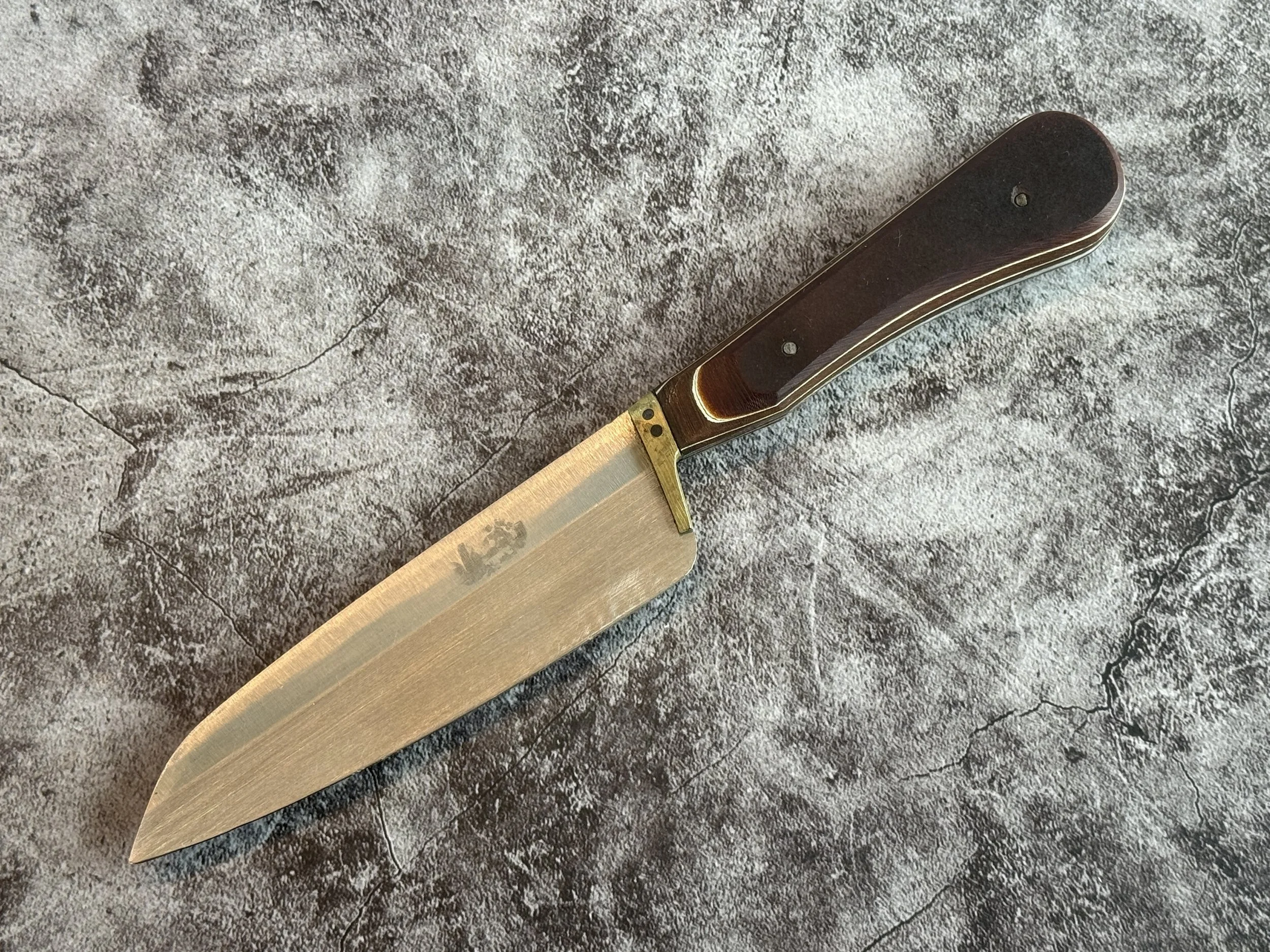
Iranian kitchen knife
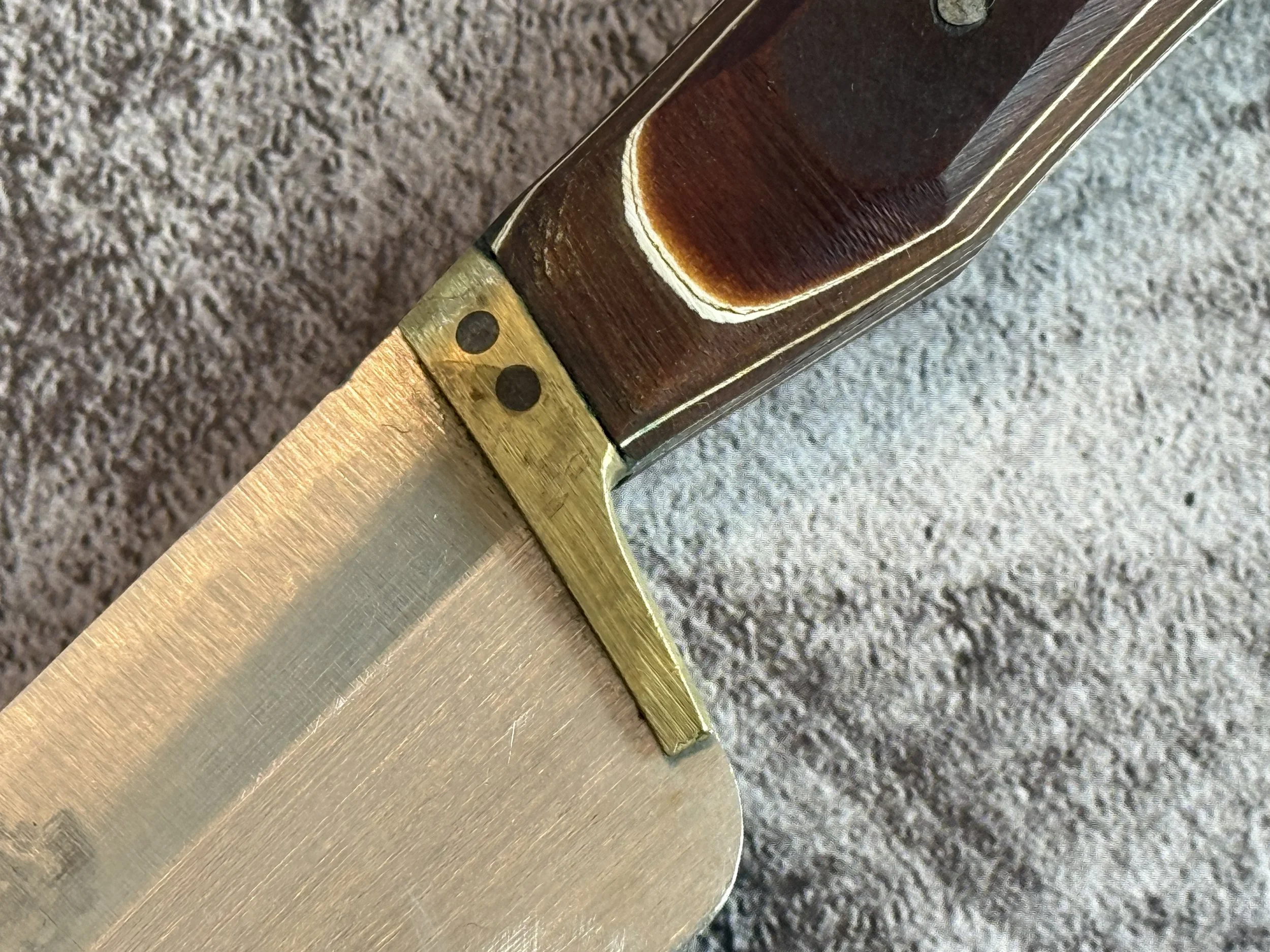
Iranian knife bolster details
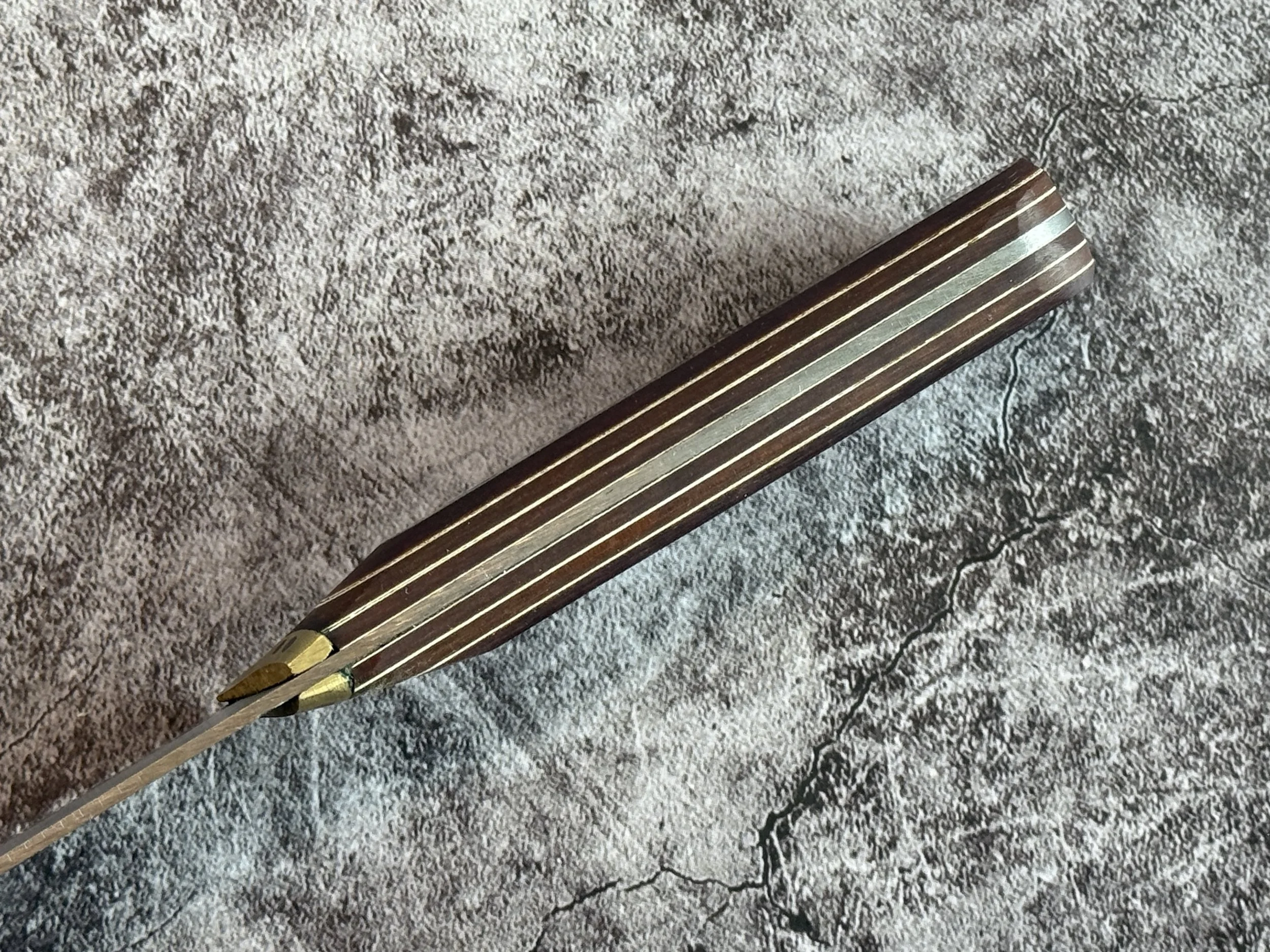
Iranian knife handle detail
One of the unexpected pleasures of making knives is that people seem to start giving you knives.
Very early in my knife-making journey I was giving away most of the knives I made. Looking back, that was probably just as well—they were far from perfect—but every one taught me something.
On one of our regular trips to Bruny Island to run our annual photography workshop with Richard and Susie Bennett, I took along one of those early knives as a gift.
Back then I was working almost exclusively with 1080 carbon steel, heat treating the blades in my little gas forge. My handle making was fairly simple and my finishing certainly wasn't what it is today, but those early knives had a rustic honesty about them that I still rather like.
Richard seemed genuinely delighted with the gift.
Then he disappeared for a moment and came back with a knife he'd bought on a recent trip to Iran. As it turned out, he'd bought two, and insisted I take one home.
It was a simple kitchen knife.
Nothing elaborate. No exotic materials. No fancy Damascus steel.
Just a beautiful, well-made little knife with a stainless steel blade, a timber handle and a brass bolster—the sort of knife I imagine could be found in kitchens all over Iran, Turkey, the Caucasus and parts of Central Asia, quietly preparing meals every day.
I love looking at knives like this.
Not because they're expensive or rare, but because they reveal the decisions another maker has made. How the bolster fits the handle. How the blade tapers. Where the balance sits. How much effort went into the finish—and just as importantly, where they decided perfection wasn't necessary.
Utility knives like this are remarkably similar wherever you travel. The shape changes slightly from one region to another, but their purpose remains exactly the same. They are honest working tools, designed to prepare food day after day.
I've seen almost identical knives in Sri Lanka, where we lived for a number of years, and in markets throughout Asia. Different countries, different makers, but all solving exactly the same problem.
A good knife doesn't have to be complicated.
Some of the best lessons I've learnt as a maker have come from studying simple knives rather than elaborate ones.
Recently I visited Richard and Susie again on Bruny Island and saw the knife I'd made for them all those years ago.
It was sitting exactly where it belonged—in the kitchen.
It had been used often. The carbon steel had developed a beautiful dark patina, every mark telling the story of another meal prepared. I was strangely pleased to see it wasn't tucked away in a drawer to keep it looking new.
It was earning its keep.
Seeing it again also reminded me how far I'd come.
I'd probably do almost everything differently if I made that knife today, but without those early attempts I wouldn't be making the knives I build now. It also reminded me that keeping things simple is often the better solution.
In fact, seeing that lovely patina has made me think I should start using high-carbon steel again on some future projects. Stainless steel is wonderfully practical, but carbon steel has a way of recording its life that stainless never quite can.
Richard's Iranian knife now lives in my own kitchen drawer.
I don't use it all that often, but every time I do it reminds me of Richard and Susie, of countless trips to Bruny Island, and of a friendship that has lasted far longer than either of us probably imagined.
Sometimes the most valuable knives aren't the most expensive.
They're the ones that carry a story.
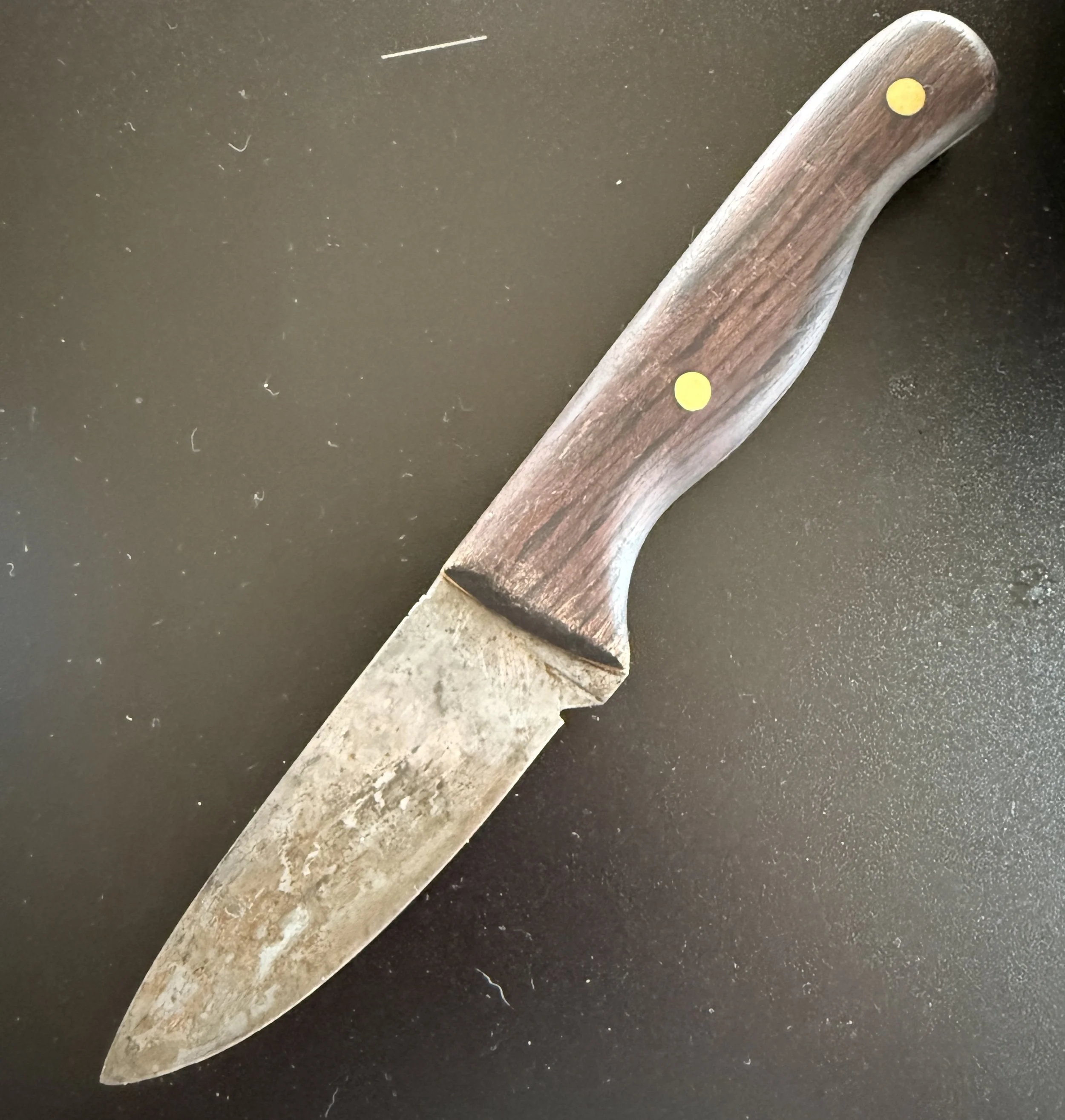
early carbon steel knife