Learning from an Old F. Dick Knife
Making knives has been a steep learning curve for me, as this is the first time I've really done either metalwork or woodworking.
We had both subjects available at high school, but I spent all my time in the science labs. Later it was the darkroom and photographic studios where you'd find me—not in the workshop.
The more knives I make, the more interested I become in the knives made by other people.
Every old knife is a lesson.
Some teach you about blade shapes. Others about ergonomics or steel. Quite often they teach you that a hundred years ago someone had already solved a problem that you thought was new.
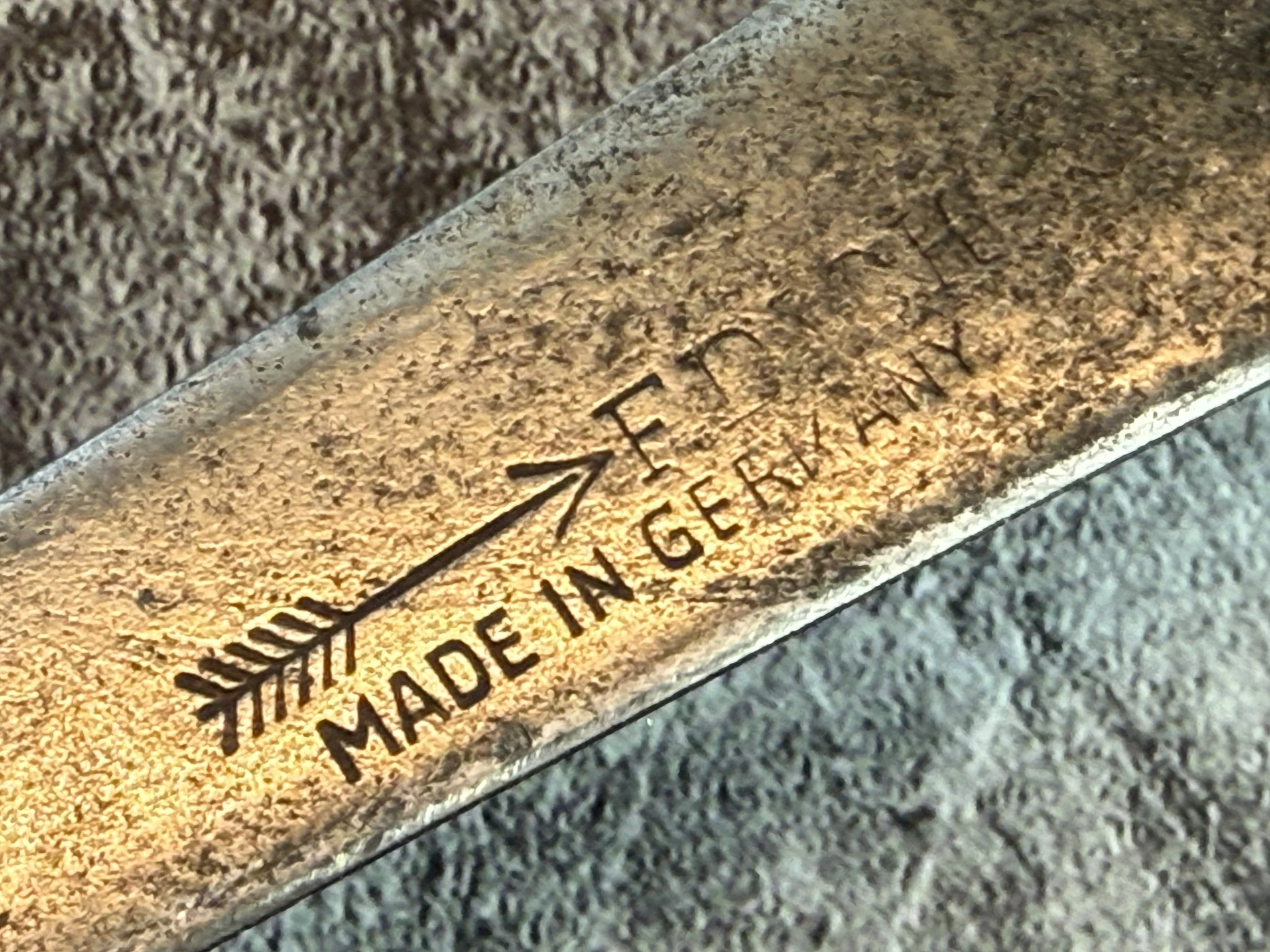
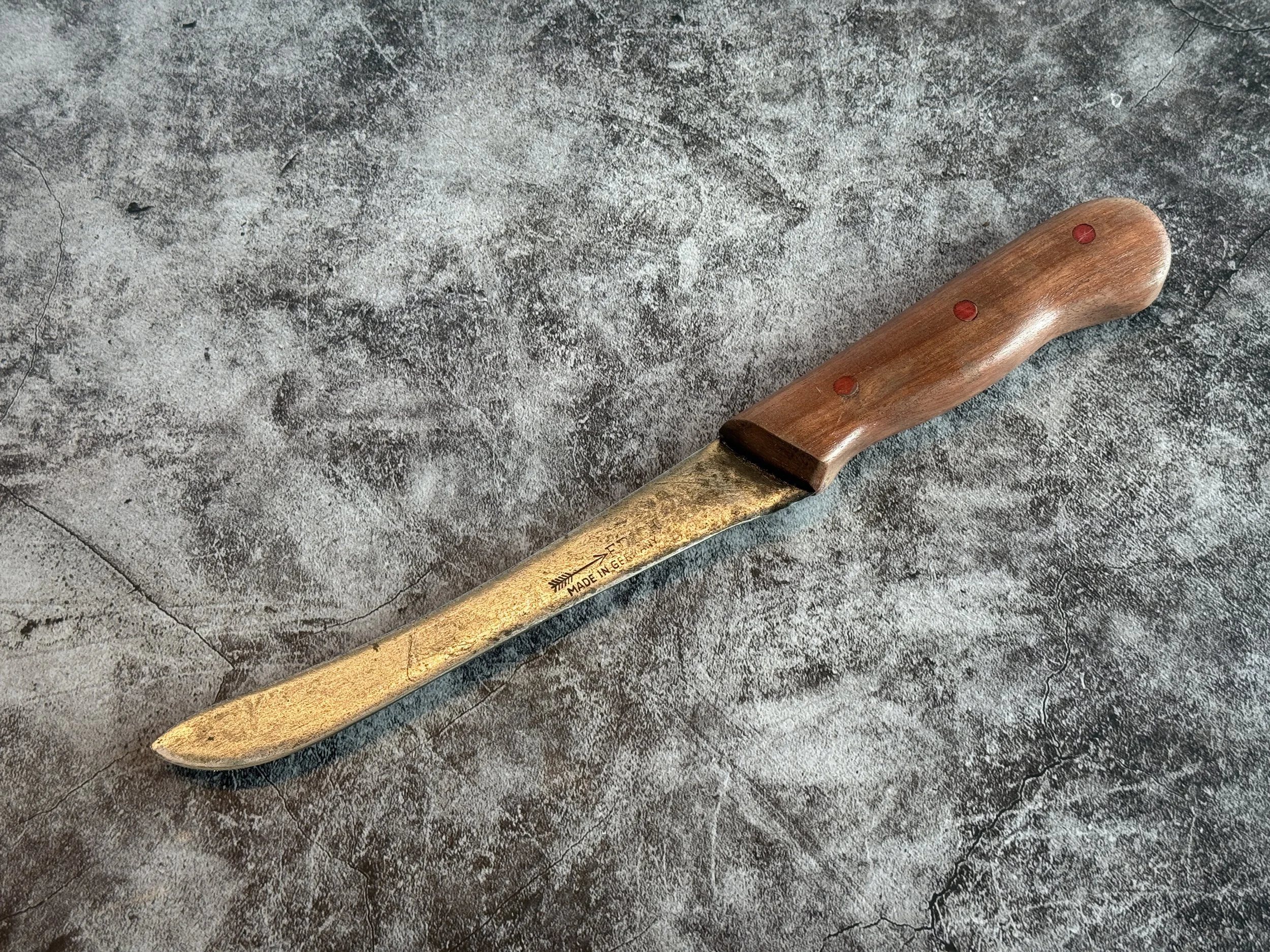
One of my favourite finds is this old knife made by F. Dick, one of Germany's oldest and most respected knife manufacturers.
Its maker's mark is worn but still visible.
F. Dick has been making professional knives since the eighteenth century, supplying butchers and tradespeople with tools built for daily use rather than display. Judging by the shape of the blade, I suspect this one was probably used as a boning or trimming knife. The way the blade has been worn away by years of sharpening and honing tells me it certainly earned its keep.
What intrigued me most wasn't the blade.
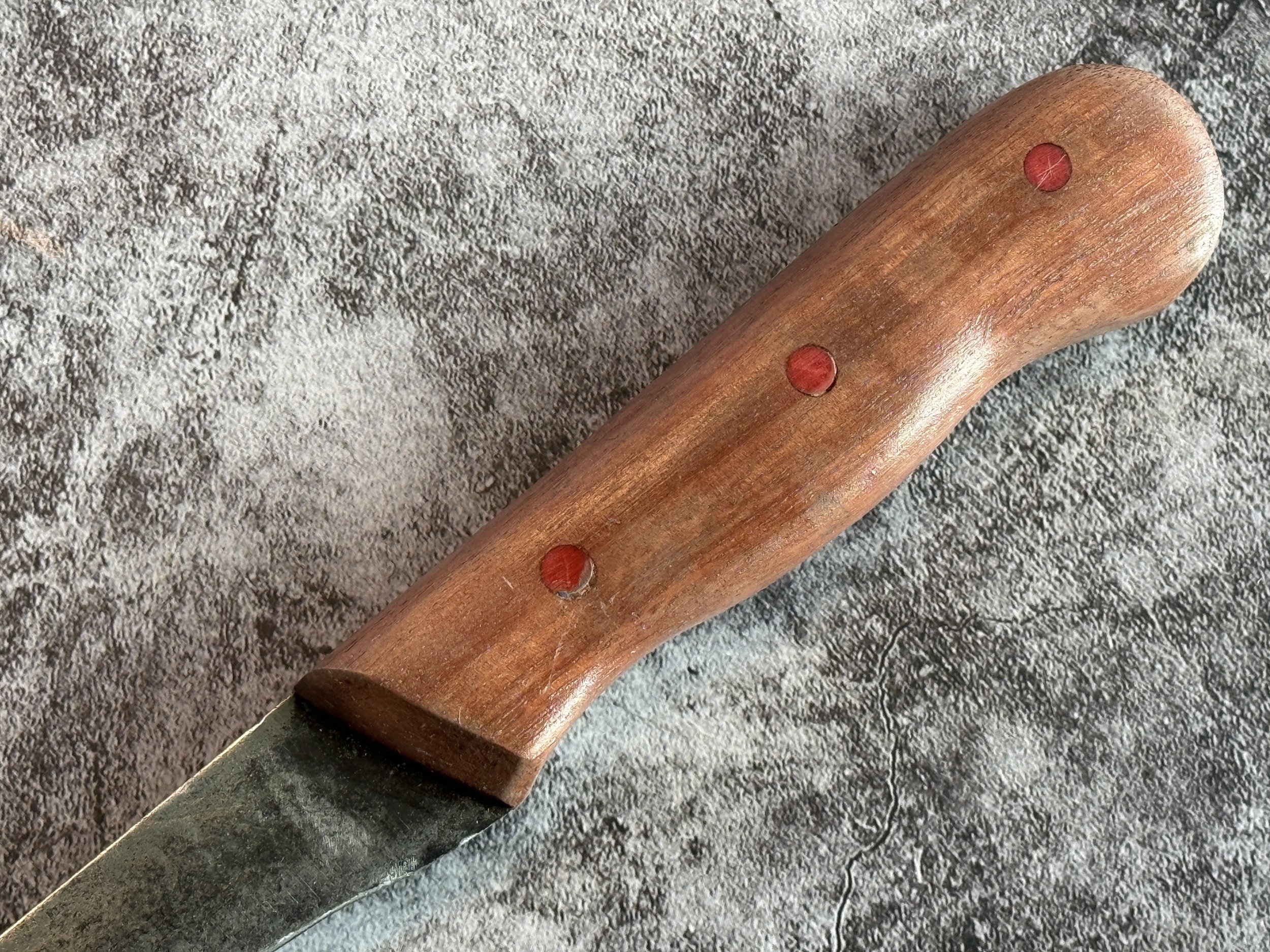
It was the handle.
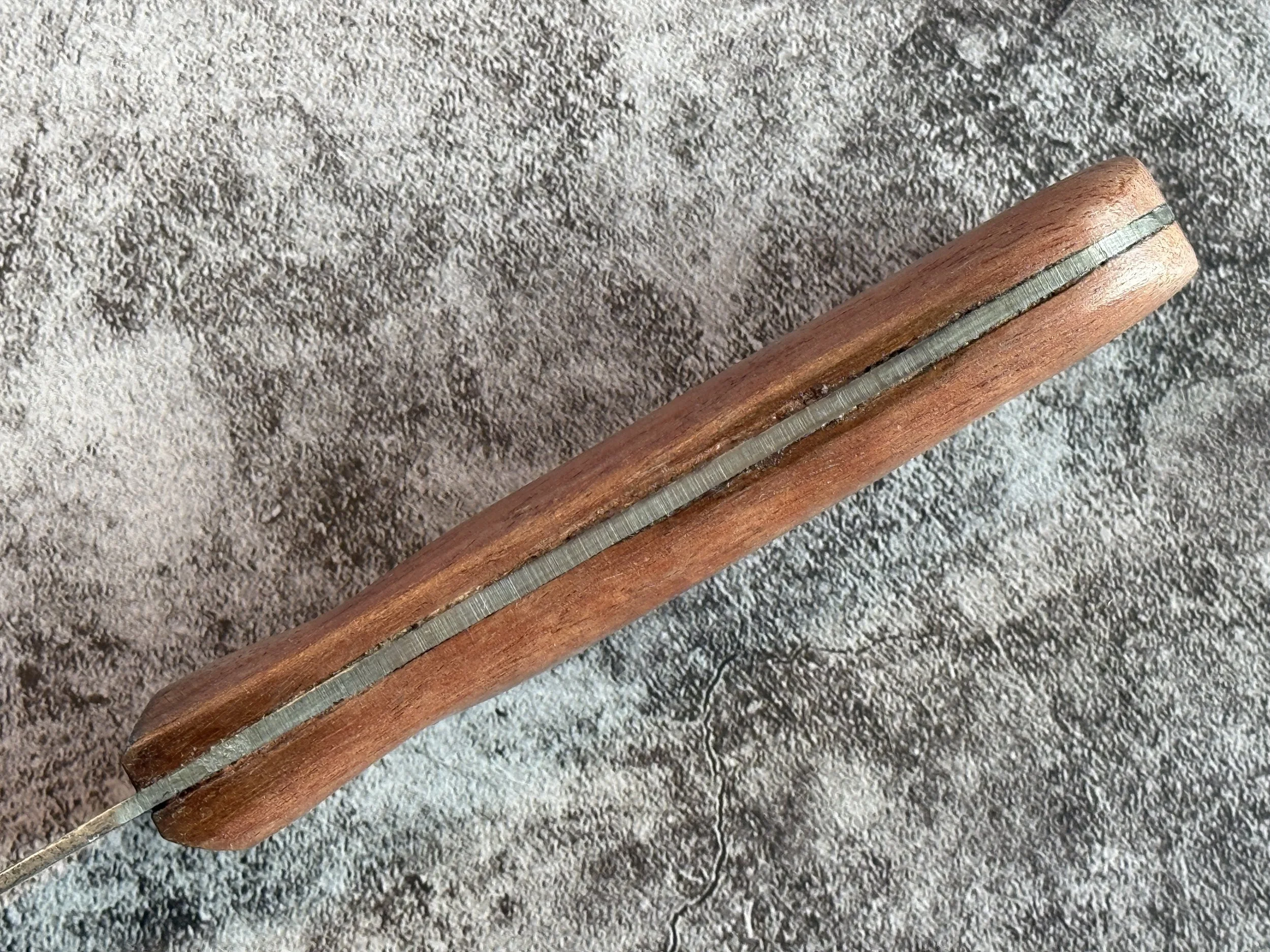
When I decided to replace the original handle, I discovered the construction was unlike anything I'd been doing over the last few years. It isn't a conventional full-tang knife, and it isn't really a hidden tang either. Instead, the tang slides into a precisely machined slot so that it's visible from the top but hidden underneath.
I'm sure that in the F. Dick factory they had specialised machinery to cut that slot perfectly every single time.
In my workshop...
...it was a little more agricultural.
I eventually made a replacement handle that works well enough, but I know I can do better. In fact, it's one of those jobs I keep meaning to revisit.
The funny thing is that restoring old knives often teaches me just as much as making new ones.
Every unusual construction method, every worn handle and every carefully considered detail becomes another lesson that finds its way into my own work.
Sometimes the best teachers are the craftsmen you've never met.