A Little Bit of the Forge
I picked up this piece of san mai steel at a sale.
I'd been wanting to have a go with it for a while.
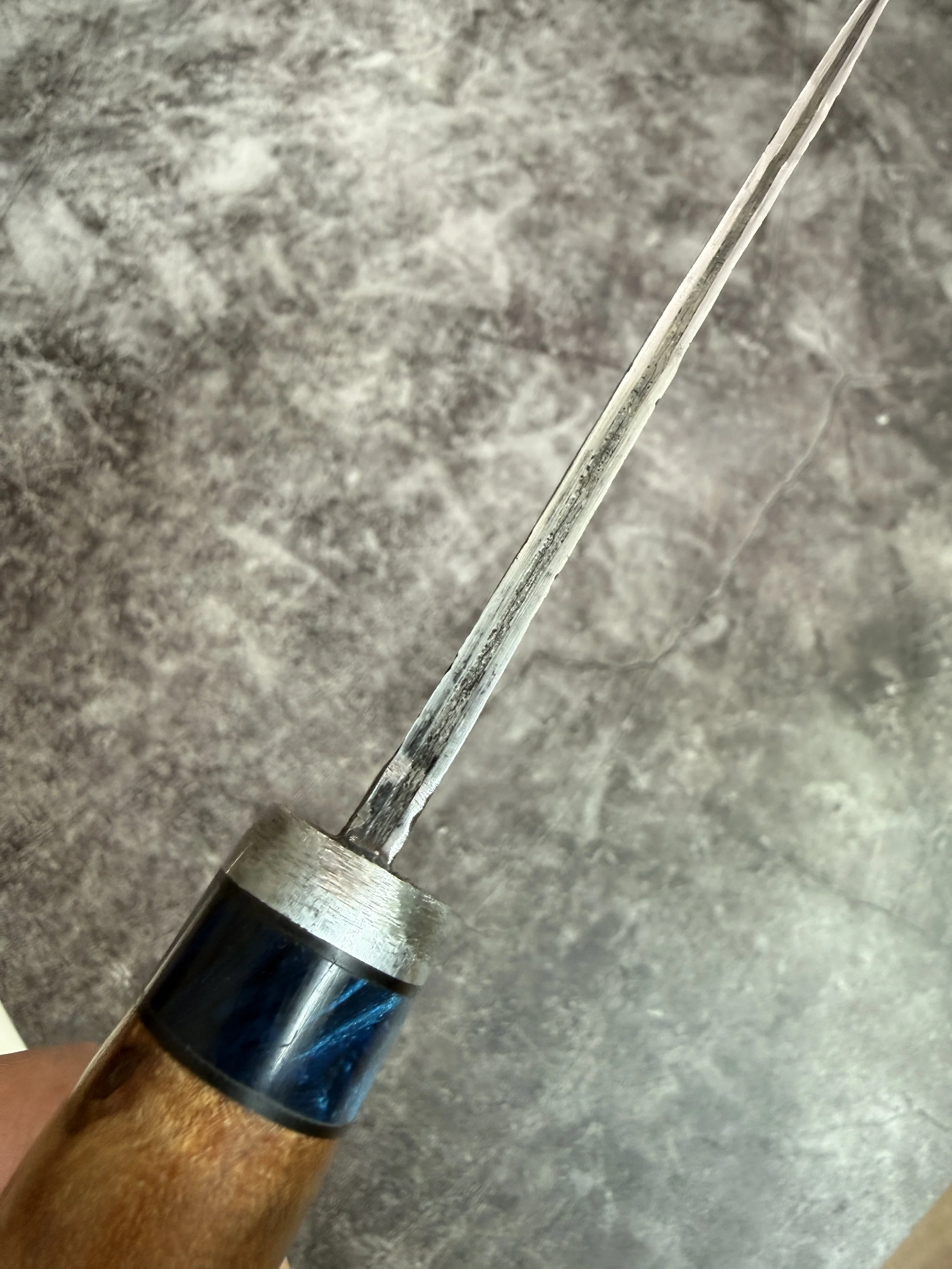
San mai—Japanese for "three layers"—is made by sandwiching a high-carbon steel core between two outer layers of stainless steel. The result is a blade that combines the best of both worlds. The stainless cladding helps protect the blade from corrosion, while the carbon steel core takes a wonderfully keen edge and is easy to sharpen.
It seemed like the perfect steel to experiment with.
Unlike many of the knives I make now, this one was forged to shape with a hammer and anvil rather than being ground from flat steel. It's a slower, noisier process, and one that leaves its own little fingerprints on the finished blade.
When it came time to finish it, I had a decision to make.
Normally I'd grind and polish the blade until every trace of the forging process had disappeared. Instead, I decided to leave part of that history intact.
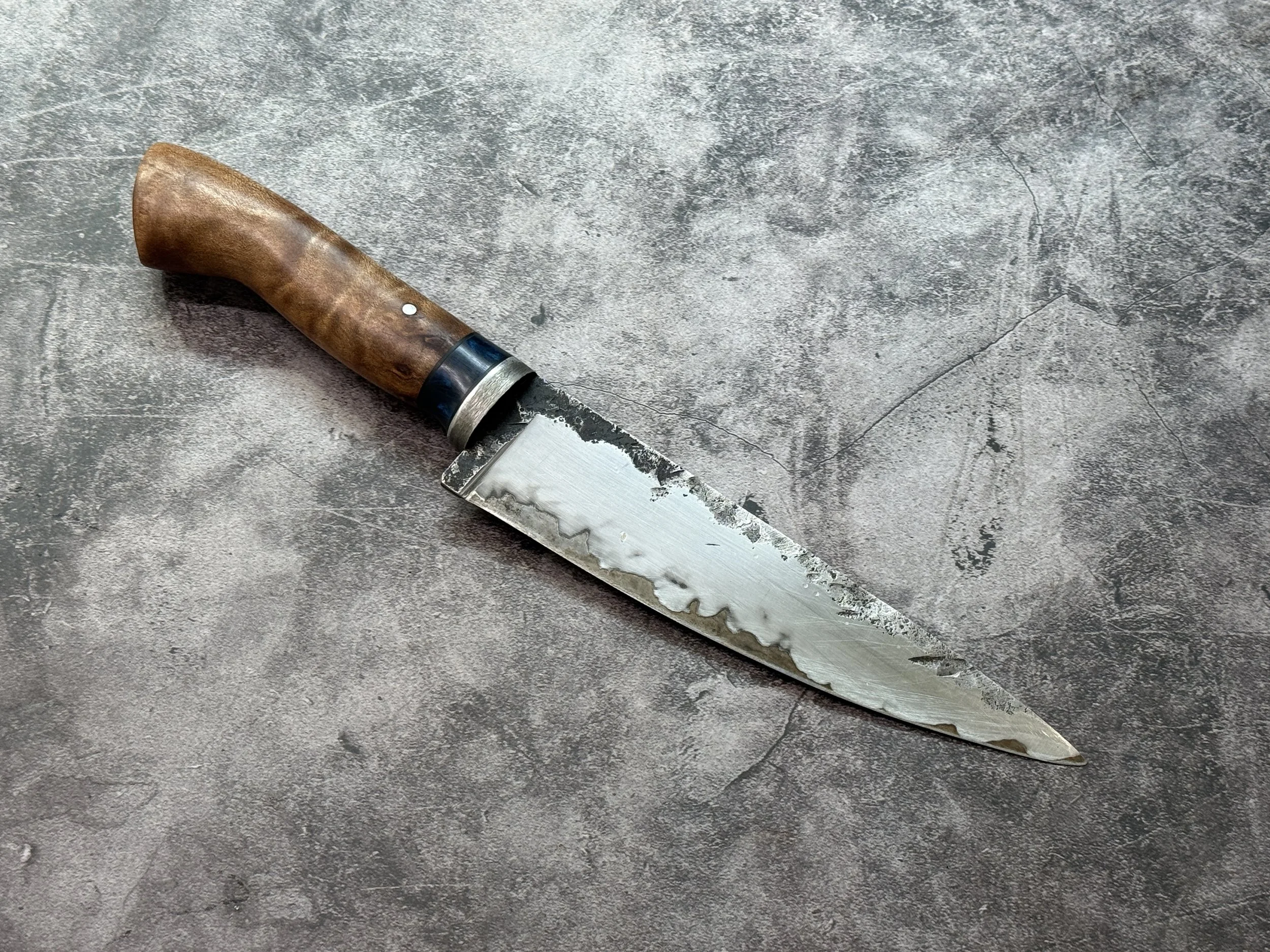
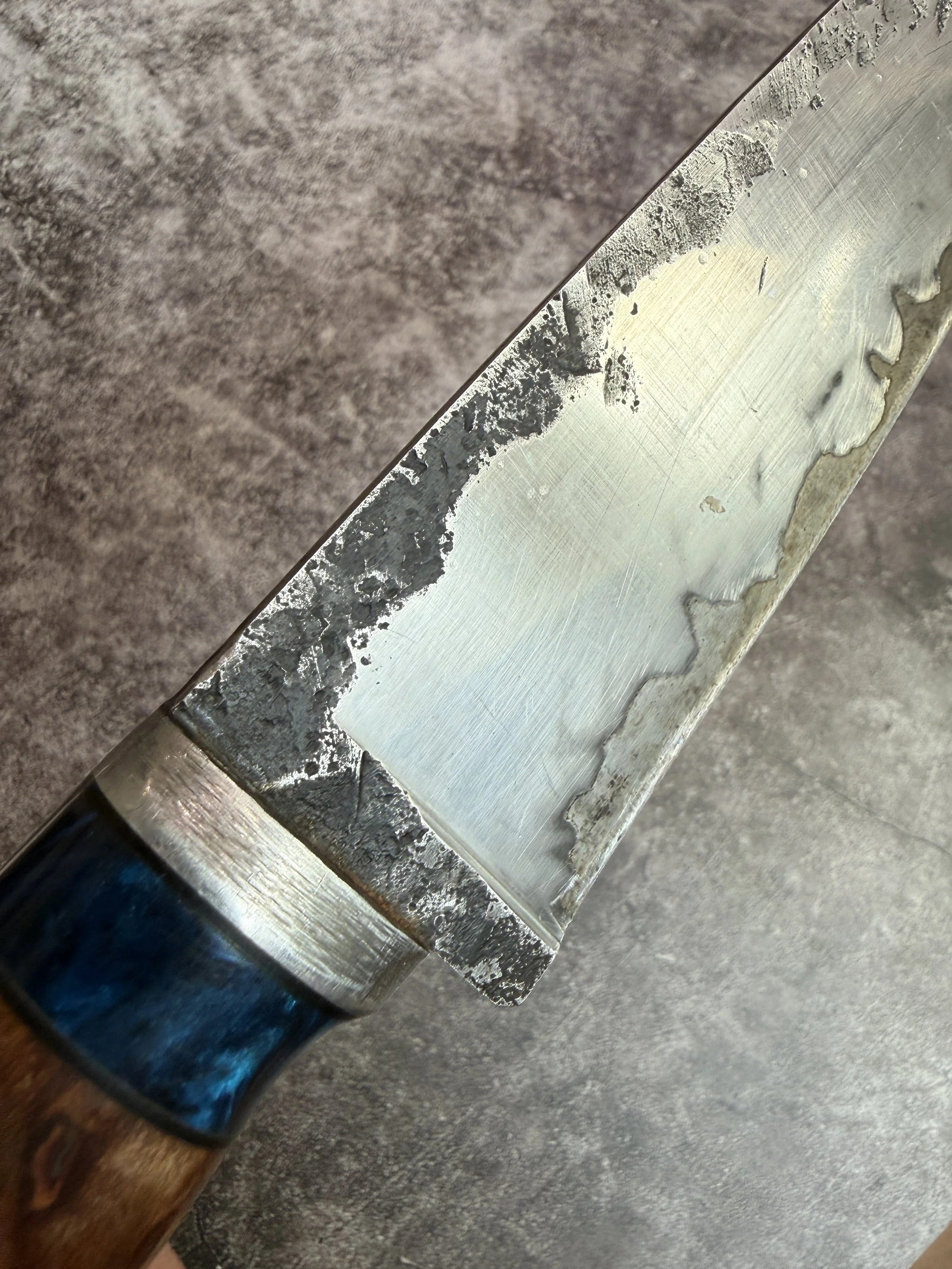
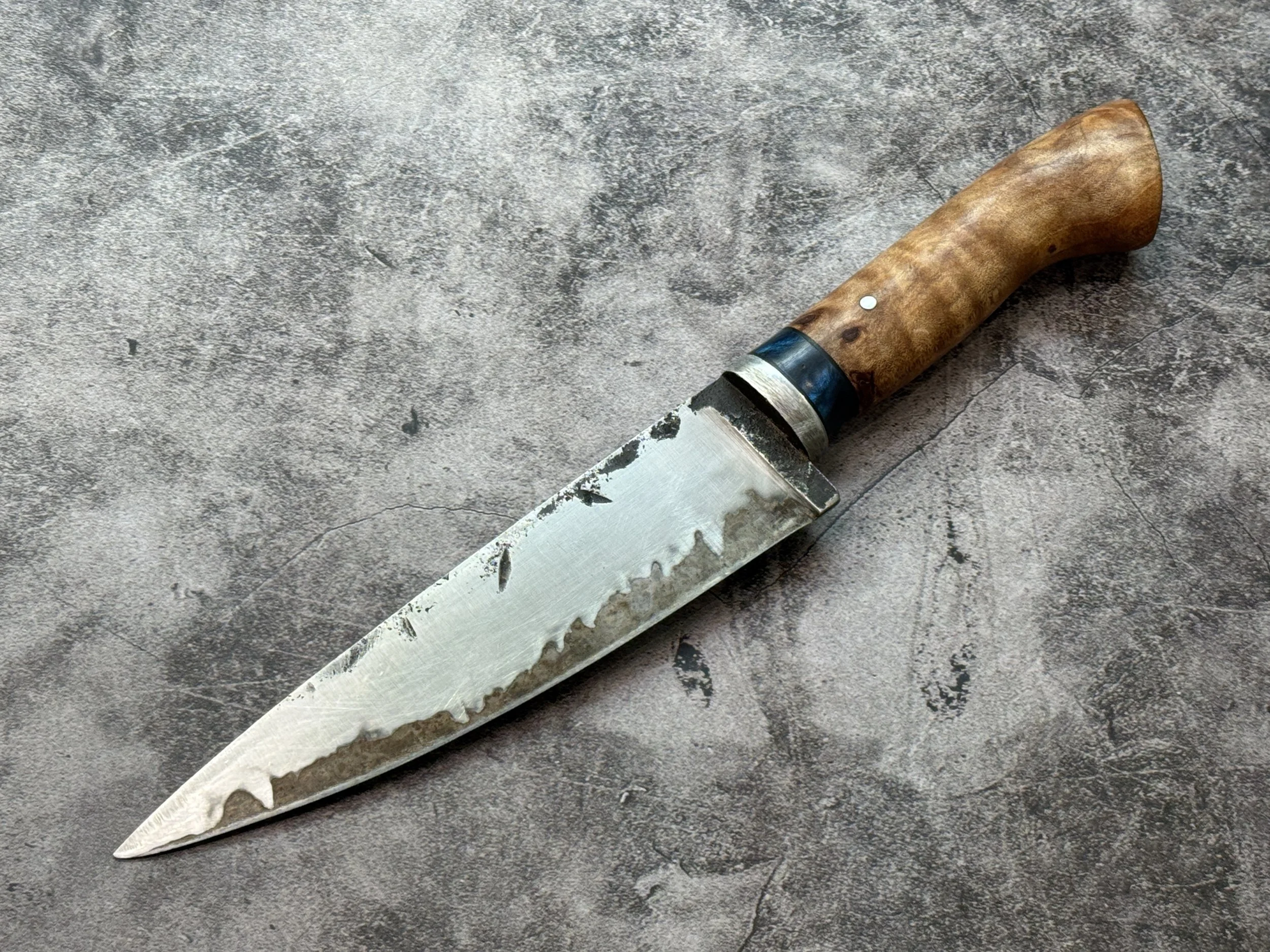
The dark textured area along the spine is known as brut de forge—literally "from the forge." It's the original forge scale left on the blade after forging, and opinions about it are fairly divided.
Some people love it because it tells the story of how the knife was made.
Others think it simply looks unfinished.
I can understand both points of view.
For this knife, though, it felt right.
I liked the idea that a little of the journey from raw steel to finished knife was still visible. Every time I pick it up, I'm reminded that before it became a kitchen knife, it was a piece of glowing steel being persuaded into shape one hammer blow at a time.
The handle is made from stabilised quilted big leaf maple, with a stainless steel bolster and blue acrylic spacer. The shimmering figure in the timber contrasts nicely with the more rugged finish of the blade, and together they give the knife a character all of its own.
What pleases me most is that this wasn't just an experiment that ended up on a shelf.
It sits in my kitchen knife block and gets used every day.
Between this knife and a handful of Opinels, most of the everyday jobs in the kitchen get done.
I think that's one of the nicest compliments a knife can receive.
Not that it's admired.
That it's used.